Route Guide 2026
How Long Does It Take to Climb Kilimanjaro?
5 to 9 days is the standard range — but the safest answer is usually 7 or 8. 95% of our climbers summit on a 7-8 day climb, and packages start at $2,195. Compare every route below.
Kilimanjaro Route Duration at a Glance
Longer routes = better acclimatisation = higher summit success. Our 95% success rate starts with choosing the right duration.
Most Kilimanjaro climbs take 5 to 9 days: Marangu is the shortest at 5–6 days, Umbwe is 6 days, Rongai is 6–7 days, Machame and Lemosho are usually 7–8 days, and Northern Circuit is 8–9 days. If you only remember one rule, remember this: 7 or 8 days is the sweet spot for first-time climbers — long enough to acclimatise properly, short enough to fit a working holiday. Our 95% summit success rate is built on that principle, and our guided packages start at $2,195. Use the chart below to match your schedule, budget, and safety margin before choosing a route.

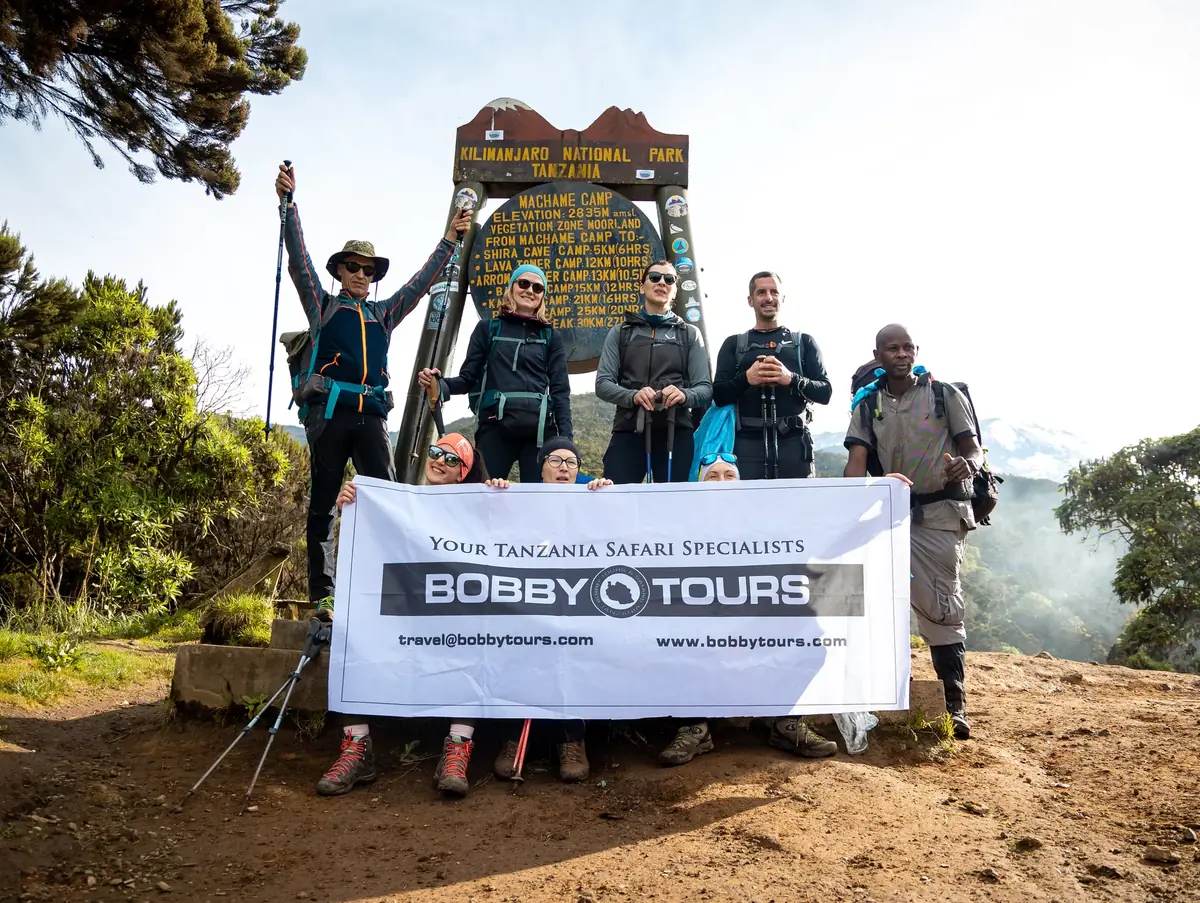
Machame Route (7–8 Days)
The Machame route — often called the "Whiskey Route" for its challenging character — typically takes 7 days, with an 8-day variant offering significantly better acclimatisation. Known for its dramatic scenery through the Shira Plateau and past Lava Tower, Machame is one of the most scenic and popular routes on the mountain.
The extra day allows your body to adjust gradually. Summit night departs from Barafu Camp around midnight — a demanding push over scree and volcanic ash in cold, dark conditions, with most climbers reaching Uhuru Peak around sunrise. See our Machame route guide for full details.
Lemosho Route (7–8 Days)
Considered one of the most beautiful and successful routes, Lemosho spans 7 or 8 days, beginning on the remote western slopes. Lower traffic in its early stages and outstanding panoramic views make it a favourite for those who want the full Kilimanjaro experience without the crowds.
The 8-day variant provides an excellent acclimatisation profile — one of the best available. Like Machame, it converges onto the Southern Circuit and culminates in a summit push from Barafu Camp. Read our Lemosho route guide.
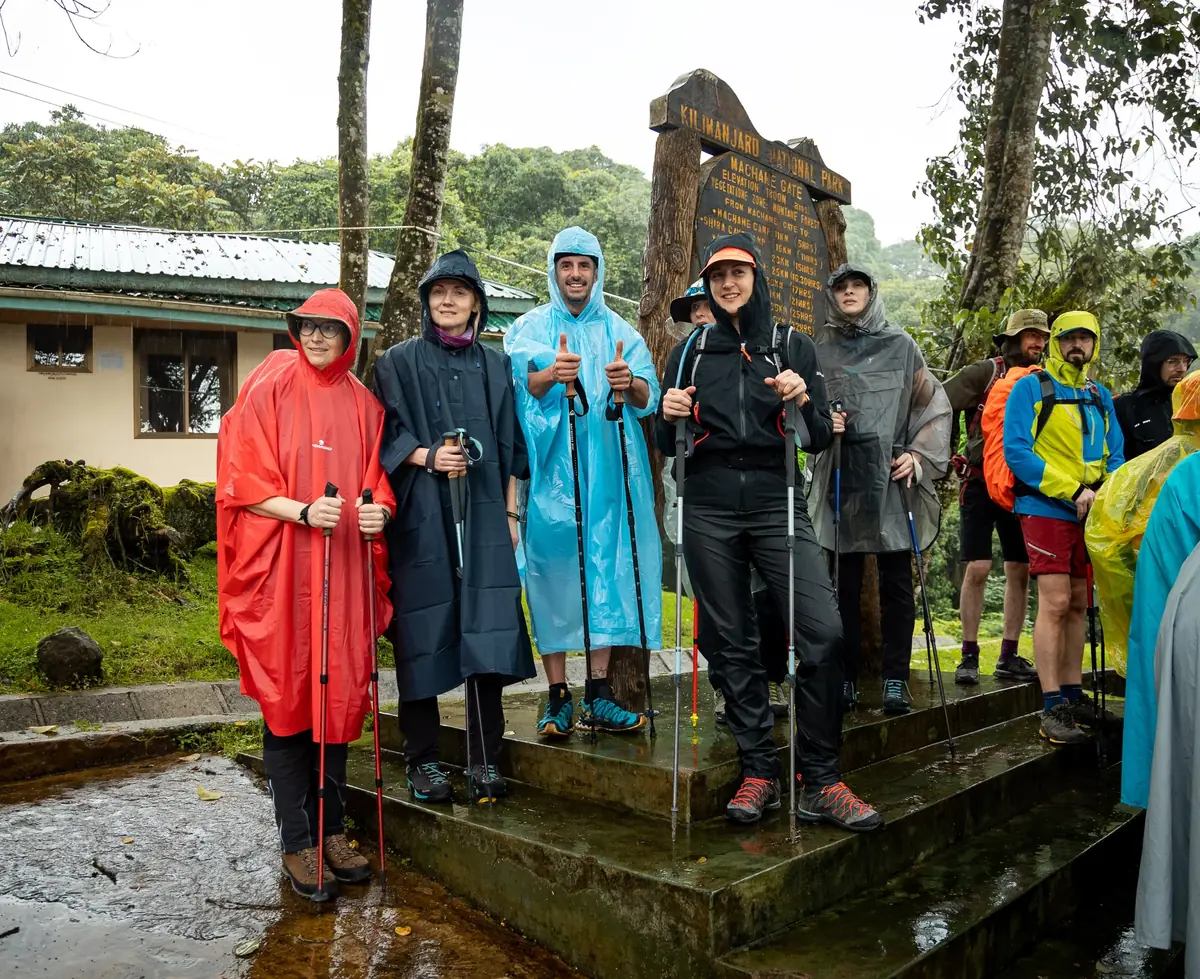
Marangu Route (5–6 Days)
The Marangu route — the "Coca-Cola Route" — is the shortest and oldest path, completed in 5 or 6 days with the unique benefit of sleeping in mountain huts rather than tents. Its relative comfort is appealing, but the compressed schedule means inferior acclimatisation and lower summit success rates than longer alternatives.
Summit night begins from Kibo Hut in alpine cold — a demanding push that rewards those whose bodies have adapted. If time or budget constrains you to this route, choose the 6-day option. Full details in our Marangu route guide.

Rongai Route (6–7 Days)
The only route approaching from the north (near the Kenyan border), Rongai takes 6 or 7 days. Drier and less crowded than the southern routes, it is especially attractive during the wet season when southern slopes are muddy. The 7-day version allows adequate acclimatisation and exceptional views across the Kenyan plains.
Summit night follows the saddle between Kibo and Mawenzi — a steady, demanding climb in high-altitude conditions. See the Rongai route guide.
Northern Circuit (8–9 Days)
Kilimanjaro's newest and longest route, the Northern Circuit takes 8 to 9 days and traces a near-full circumnavigation of the Kibo massif. The extended duration provides the best acclimatisation profile of all routes — and the highest summit success rates. Unparalleled panoramic views and genuine solitude make it exceptional.
Trekkers on the Northern Circuit arrive at summit night better rested and more acclimatised than on any other route. The extra days are not luxury — they are the reason success rates are so high. Full guide: Northern Circuit route.
Umbwe Route (6 Days)
The most direct and demanding path, Umbwe is completed in 6 days and involves a steep, rapid ascent that challenges even experienced mountaineers. Success rates are lower due to the aggressive elevation gain — the acclimatisation profile is poor compared to longer routes. Suitable only for highly fit trekkers with prior high-altitude experience. See the Umbwe route guide.
If you are considering Umbwe, read our best time to climb Kilimanjaro guide — weather conditions on Umbwe's exposed slopes can be extreme year-round.
Why Summit Night Timing Matters
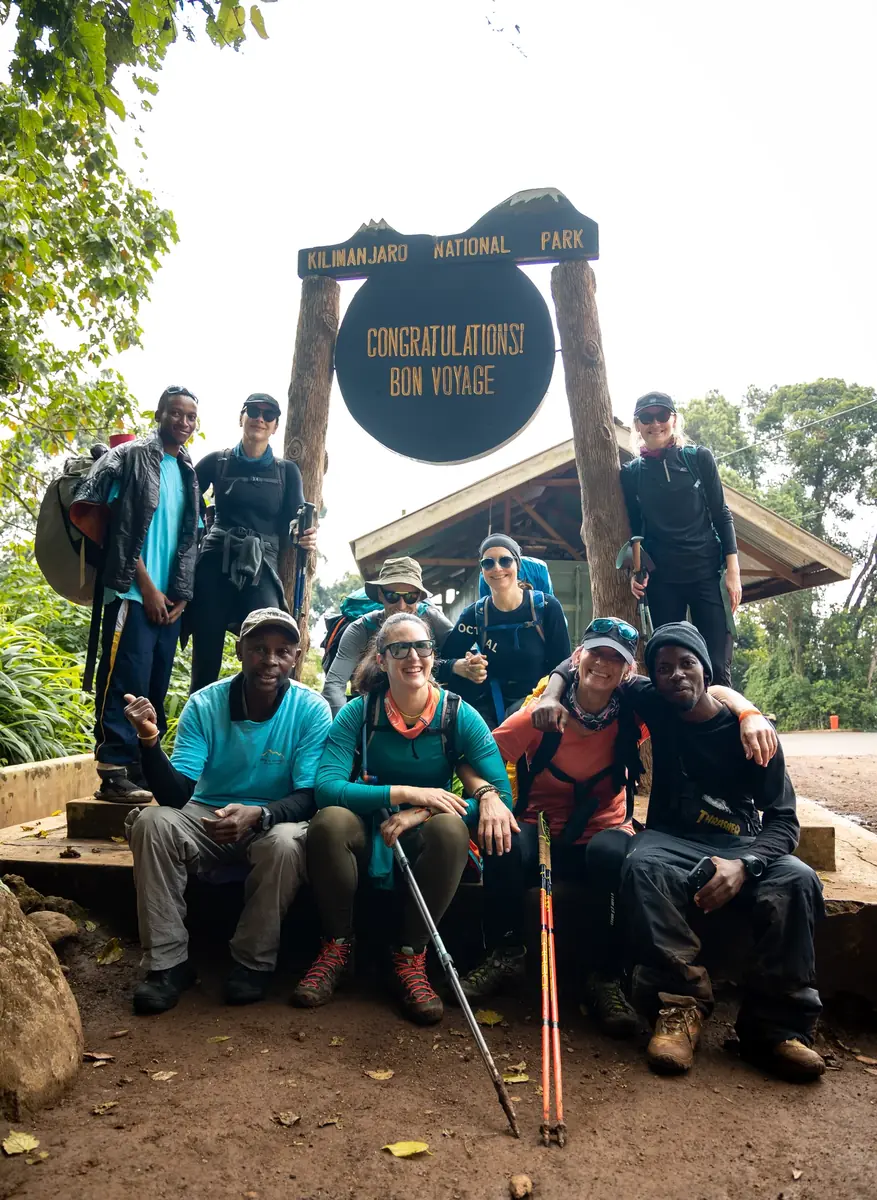
Every route includes a summit night — and that night determines everything. Summit push begins between 11pm and 1am from Barafu Camp (or Kibo Hut on Marangu), with climbers ascending 1,200m of vertical gain over 8–12 hours in temperatures that can drop to minus 20°C with windchill.
The goal is to reach Uhuru Peak (5,895m) around sunrise — not only for the view, but because daylight descent on the same day is significantly safer than descending in darkness after a failed attempt. Climbers who reach the summit by 9am have a safe window to descend to base camp the same day. Those who summit after 11am face a dangerously extended day with increased risk of altitude illness and exhaustion.
Our guides monitor every climber's vital signs at high altitude camps and make honest calls about summit readiness. That discipline — turning back when the body says no — is why our summit success rate sits at 95% across all routes.
Why Shorter Routes Have Lower Success Rates
The science is clear: insufficient acclimatisation is the primary cause of failed summit attempts and acute mountain sickness (AMS). Ascend too quickly and your body cannot produce the red blood cells or make the physiological adjustments needed at altitude. Longer routes allow a "climb high, sleep low" approach — the cornerstone of safe, successful high-altitude trekking.
Our 95% summit success rate is a direct result of prioritising optimal acclimatisation on every climb we guide. We do not offer 5-day Machame or Lemosho climbs — the numbers do not justify the risk to our clients.
Training Timeline by Route Duration
Your training should match your route. Longer routes demand greater endurance — not just raw fitness, but the ability to hike 6–8 hours per day for consecutive days while carrying a loaded pack. Use this timeline as your training framework.
6+ months out — Build your aerobic base
Start with 3–4 cardio sessions per week: running, cycling, or swimming. Target 30–45 minutes at 65–75% of your maximum heart rate. Add one weekend hike per fortnight. This phase builds the mitochondrial density you will need at altitude.
4–6 months out — Increase load and duration
Extend weekend hikes to 4–6 hours on uneven terrain. Begin carrying a loaded pack (8–10 kg). Add back-to-back hiking days to simulate the fatigue of a multi-day climb. This is the phase most people skip — do not skip it.
2–4 months out — Peak conditioning
Hikes should now reach 6–8 hours with 12–15 kg. Practice on terrain with significant elevation gain (300–600m per hike). Aim for at least two consecutive full-day hikes per week. If possible, do one overnight hike to experience hiking in the dark with a headlamp.
2–4 weeks out — Taper and recover
Reduce training volume by 30–40%. Your body needs time to fully recover and supercompensate. Stay active but do not exhaust yourself. The worst thing you can do is arrive at Kilimanjaro with accumulated fatigue from over-training.
8–10 days before departure — Travel and arrival
Arrive in Arusha or Moshi at least 2 days before your climb. Use this time to settle in, hydrate well, and attend your pre-climb briefing. Do not attempt to fit in extra training — your taper phase should be complete.
For 8–9 day routes (Northern Circuit), extend each training phase by 2–4 weeks. For 5–6 day routes, you can compress slightly but should still hit the same hour targets. See our full 12-week Kilimanjaro training plan for a structured programme.
Which Route Duration Is Right for You?
- First-time high-altitude trekker: 7-day Machame or 8-day Lemosho — best acclimatisation for newcomers.
- Want the best odds: 8–9 day Northern Circuit — highest success rate on the mountain.
- Budget-conscious: 6-day Marangu — huts reduce gear costs, but choose 6 days not 5.
- Wet season: 7-day Rongai — drier northern approach, less mud.
- Experienced mountaineer: 6-day Umbwe — a genuine challenge for those who know altitude.
Frequently Asked Questions
How long is the shortest route up Kilimanjaro?
The shortest route is the Marangu route at 5 days. However, its rapid ascent results in notably lower summit success rates than longer routes. Most climbers should opt for at least 7 days.
What is the fastest Kilimanjaro ascent on record?
While some extreme athletes have completed speed ascents in under 24 hours, these are highly dangerous and require exceptional physiological conditioning. For typical trekkers, the Marangu 5-day route is the fastest commercially viable ascent.
Can you climb Kilimanjaro in 4 days?
No authorised operator offers a 4-day Kilimanjaro climb. The minimum for any route is 5 days, and even that is strongly discouraged due to severe AMS risk and very low summit success rates.
What affects Kilimanjaro summit success rate?
Key factors include route duration (longer routes allow better acclimatisation), physical fitness, mental resilience, quality of guide team, pace management, and weather conditions. Our 95% success rate is built on prioritising optimal acclimatisation schedules.
How does route duration affect Kilimanjaro summit success?
Longer routes give your body more time to produce red blood cells, adjust to reduced oxygen levels, and develop the physiological adaptations needed at altitude. The critical window is time spent above 3,500m — the longer you spend there with gradual ascent, the better your summit chances. A 7-day Machame climb has a strong climb-high-sleep-low profile with us; a 5-day Marangu has a significantly lower rate due to the rapid altitude gain.
How should I train for a multi-day Kilimanjaro climb?
Train with multi-day hikes carrying a 10–15 kg pack, aiming for 6–8 hours of hiking per day. Start 3–6 months before your climb, peaking 2–4 weeks before departure. Cardiovascular endurance matters more than raw strength — focus on sustained effort at altitude-simulated intensity.
Plan Your Kilimanjaro Climb
Tell us your dates and experience level — we'll recommend the right route and duration for your summit. See all-inclusive packages from $2,195 →
Get My Free Climb Plan →Kilimanjaro Climb — Ready to summit?
+255 786 110 786