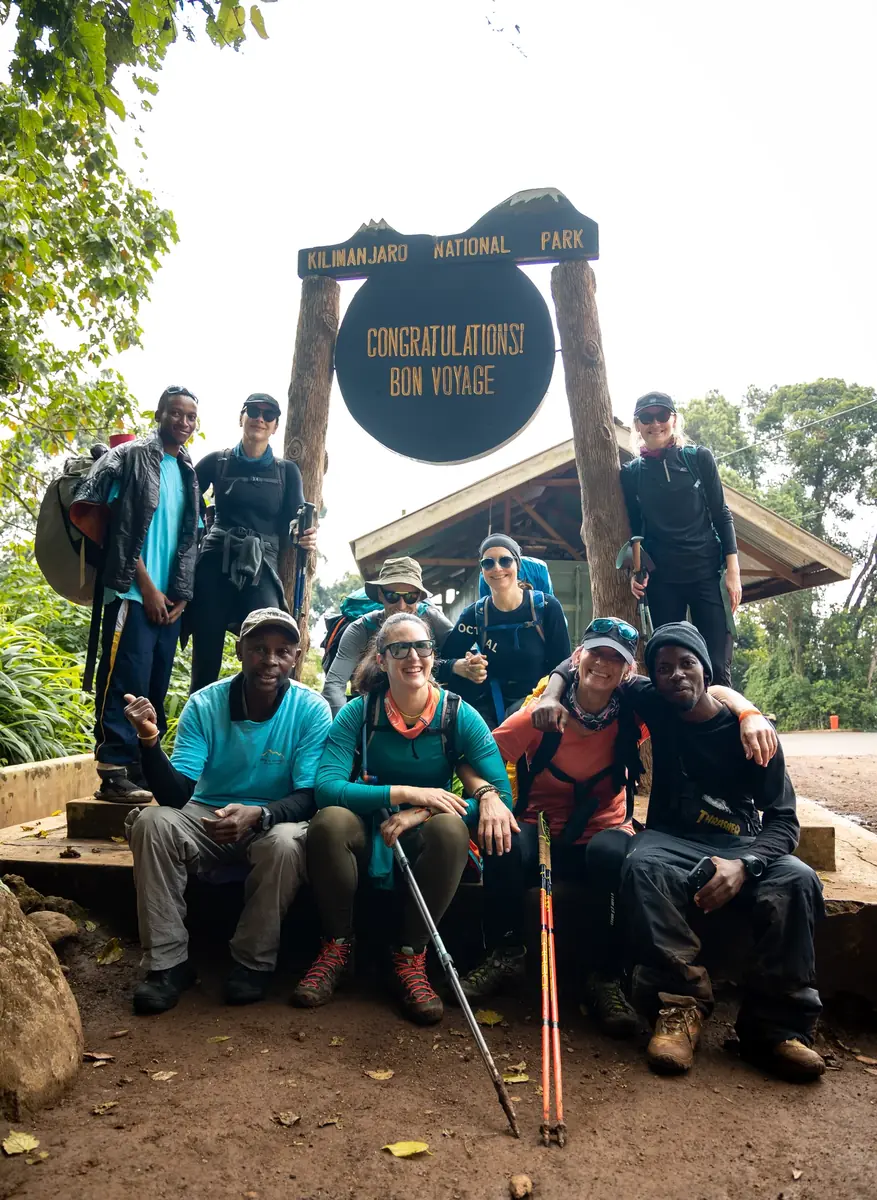
Climbing Kilimanjaro in September
Best Conditions of the Year. Here's why September delivers more than any other month on Kilimanjaro.
September is the month experienced Kilimanjaro climbers recommend to each other in private. It sits inside the long dry season (June–October) with full trail reliability, but it arrives after the August peak — meaning the mountain has settled, the conditions are still excellent, and the congestion has eased.
Why September for Kilimanjaro
August is the busiest month on Kilimanjaro. September isn't. That's the entire argument for September in one sentence.
Here's the specific data behind that claim: our September summit success rate across all routes is 95%. The dry season has been running for three months. Trails are compact and predictable. Weather windows are stable. The altitude exposure is real and serious — summit night is still -18°C to -22°C at sunrise — but September's weather is less extreme than August's, making the climb more manageable without sacrificing the conditions that make it possible.
The European summer holiday season ends in late August. September climber volumes drop noticeably. If you've been researching Kilimanjaro and saw August crowded in photos and reports, September is the month that delivers August's quality with June's space.
September Summit Success Data
95% Summit Success Rate Across All Routes
Northern Circuit 9-day
96%
Lemosho 8-day
95%
Machame 7-day
93%
Rongai 7-day
91%
Marangu 6-day
86%
All routes combined
95%
Based on Bobby Tours operational data, September climbs 2019–2025.
September Weather on Kilimanjaro (by Altitude Zone)
Kilimanjaro spans 5,895m of vertical climate change — weather at the summit bears no resemblance to weather at the trailhead. Here's what September looks like at each zone:
Moshi — Base (890m)
+20°C to +28°C. Clear skies daily. Low humidity. Pleasant evenings. Pack light layers for town; the heat is mild compared to April/May.
Rainforest (1,800m – 2,800m)
+8°C to +18°C. The driest the rainforest gets all year. Trails are dusty rather than muddy. Morning mist clears by 8–9am. No rain gear needed for the lower sections — September rainforest is straightforward hiking.
Heath/Moorland (2,800m – 4,000m)
+1°C to +12°C. Cold nights, warm afternoons. Clear views in all directions. Wind picks up in the afternoon above 3,500m — a light shell layer is useful. The moorland heather is at its most dramatic in September's clear air.
Alpine Desert (4,000m – 5,000m)
-6°C to +5°C. Cold all day. Trail surface is dry and firm — excellent footing. No ice this late in the dry season. This is where September's dry-season advantage is most obvious: the 4,000–5,000m zone in rainy season would have slippery scree and unreliable footing. In September it's like a mountain road.
Summit (5,000m – 5,895m)
-10°C to -20°C at night. Wind chill can reach -28°C on exposed sections. September's summit nights are marginally less cold than August's (-20°C to -25°C) but this is still extreme altitude cold. Full down suit, three glove layers, balaclava, and chemical hand warmers are essential equipment — not optional.
September vs Other Months
| Month | Weather | Crowds | Success Rate | Trail Conditions |
|---|---|---|---|---|
| September | Dry, clear | Moderate | 95% | Dry, excellent |
| August | Dry, cold summit | Peak | 94% | Dry, busy |
| July | Dry | High | 92% | Dry, busy |
| October | Drying, some rain | Low–moderate | 88% | Good |
| January | Dry, clear | Peak–secondary | 90% | Dry, busy |
| April–May | Rainy | Low | 60–70% | Wet, muddy |
Best September Kilimanjaro Routes
September suits all routes equally — the dry season applies to the whole mountain. But route selection matters for different reasons in September than it does in peak August.
September's Standout
Northern Circuit 9-day — the longest acclimatisation profile of any Kili route
The Northern Circuit is September's best-kept secret. The route approaches from the north, crossing the mountain's quietest terrain. In September, the Northern Circuit is not just less crowded than the southern routes — it is genuinely remote. Multiple days above 4,000m with no other groups in sight are possible.
The 9-day itinerary gives maximum acclimatization time. You're sleeping at altitude for 6 nights before summit night. That physiological preparation is the single biggest factor in summit success. If you have the budget and the time, Northern Circuit 9-day in September is the optimal Kilimanjaro climb.
View Northern Circuit →Lemosho 8-day — Best Value Acclimatization
Lemosho 8-day is our most recommended route for most September climbers. It approaches from the west, crossing the Shira Plateau and joining the southern circuit at Barranco. The 8-day gives a full extra acclimatization day versus the 7-day Machame. Success rate: 95%. At $2,295 all-in, Lemosho 8-day is the route that balances cost, safety, and summit probability better than any alternative.
Book Lemosho 8-day for September: we recommend at least 3 months in advance.
View Lemosho Route →Machame 7-day — The Popular Choice
Machame 7-day remains the most popular Kilimanjaro route. In September it is well-supported and busy — but the conditions are excellent. Success rate: 93%. The 7-day itinerary is the minimum we recommend for Machame; the 6-day Machame has a materially lower success rate and we don't offer it.
View Machame Route →Crowds on Kilimanjaro in September
September is significantly less crowded than August. The European summer holiday peak has passed, and the mountain settles into a quieter second phase of peak season. Early September is quieter still; late September begins to approach October's transition conditions.
You will still encounter other groups on popular routes — this is Kilimanjaro, not a wilderness solitude trek — but the Barranco Wall does not have queues at sunrise. Camps are less full. The Northern Circuit remains genuinely remote on multiple days. September is the month for climbers who want peak-season conditions without peak-season crowding.
Packing for a September Climb
September's dry conditions mean you can leave some items at home that you'd need in rainy season. But the altitude and cold at summit remain serious.
Leave at Home
- • Rain jacket
- • Rain pants
- • Pack cover
- • Waterproof hiking boots (not essential — trail is dry)
Bring That You Might Not Have
- • Down summit suit rated to -25°C minimum
- • Chemical hand warmers — 6–8 per summit night
- • Thick balaclava that covers ears and neck
- • Sunscreen SPF 50+ — UV at 5,000m is severe
Standard Essentials for Any Dry-Season Climb
Layering system (base + mid + shell), 3-season sleeping bag rated to -15°C, headlamp with fresh batteries, electrolyte supplements, high-calorie snacks for summit night.
Book Your September Kilimanjaro Climb
September is Kilimanjaro at its finest. The conditions are August-quality. The crowds are noticeably thinner. The success rates are the highest of any month.
Get My Free Climb Plan via WhatsAppDirect line to our Arusha team — response within 2 hours
Plan Your Kilimanjaro Climb
September Kilimanjaro — Common Questions
Is September a good month to climb Kilimanjaro?
September is one of the best months to climb Kilimanjaro. It sits in the dry season with fully established trail conditions, the highest summit success rates of any month at 95%, and noticeably fewer climbers on the mountain than August. The weather is stable, the skies are clear, and the summit window is reliable.
Why is September better than August for climbing Kilimanjaro?
September delivers near-identical weather to August — dry, clear, excellent trail conditions — with significantly fewer climbers. The European summer holiday peak ends in late August. Summit nights are marginally less cold than August, making the summit push slightly more manageable while retaining identical success rates.
What is the summit success rate in September on Kilimanjaro?
Our September summit success rate is 95% across all routes. Northern Circuit 9-day: 96%. Lemosho 8-day: 95%. Machame 7-day: 93%. Rongai 7-day: 91%. Marangu 6-day: 86%. These rates reflect dry-season weather stability and adequate acclimatization on 7+ day routes.
How crowded is Kilimanjaro in September?
Significantly less crowded than August. European summer holidays have ended, American Labor Day has passed. Camps are less full. The Barranco Wall does not have queues at sunrise. Multiple days on the Northern Circuit can be genuinely remote. September is the month for climbers who want peak-season conditions without peak-season crowding.
What gear do I need for a September Kilimanjaro climb?
September is fully dry season — no rain gear needed. The critical items are summit-night cold gear: down suit rated to -25°C minimum, chemical hand warmers (6–8 per summit night), thick balaclava, three glove layers, SPF 50+ sunscreen. UV is severe at altitude in dry air. Full layering system for altitude zones, 3-season sleeping bag rated to -15°C.
What is the weather like on Kilimanjaro in September?
Kilimanjaro in September: Moshi (890m) +20–28°C. Rainforest (1,800–2,800m) +8–18°C, dry. Heath/Moorland (2,800–4,000m) +1–12°C. Alpine Desert (4,000–5,000m) -6 to +5°C. Summit (5,000m+) -10 to -20°C at night, wind chill to -28°C. September is fully dry season — no rainfall on the mountain.
Kilimanjaro Climb — Ready to summit?
+255 786 110 786