Gear Guide
Kilimanjaro Gear — The Real Cost Math
Rent vs buy vs borrow. Real dollar figures for every major item. Decision matrix for first-timers and return climbers.
Decision Matrix
All prices in USD. Arusha rental shop rates for full climb duration (6–9 days).
| Gear Item | Rent (Arusha) | Buy (Quality) | Borrow | Verdict |
|---|---|---|---|---|
| Sleeping bag (-10°C) | $20–40 | $150–400 | Free* | Rent (first-timers) |
| Down / expedition jacket | $15–30 | $200–500 | Free* | Rent (first-timers) |
| Trekking poles (pair) | $10–20 | $60–200 | Free* | Rent (first-timers) |
| Duffel bag (80–100L) | $10–20 | $50–120 | Free* | Rent or borrow |
| Sleeping pad (foam/memory) | $5–15 | $30–100 | Free* | Rent (first-timers) |
| Gaiters | $5–10 | $30–80 | Free* | Rent or borrow |
| Headlamp | $5–10 | $20–60 | Free* | Buy (lightweight) |
| Hiking boots | NOT RENTABLE | $100–350 | Risky* | ALWAYS BUY |
| Base layers (top + bottom) | Not typically rented | $80–200 | Free* | Buy or borrow |
| Waterproof jacket + trousers | Not typically rented | $100–350 | Free* | Buy or borrow |
* Borrow assumes gear is in good condition, clean, and has been verified for your climb dates. See inspection checklist below.
Most gear advice lists what to bring. This page answers the question climbers actually agonize over: should I spend money renting, or just buy this? The answer depends on three things: whether you already own the item, how many times you will use it, and whether fit matters.
Here is the math that settles the debate for each major category — plus a recommendation framework so you can make your own call in under five minutes.
Sleeping Bag — The Biggest Cost Decision
The sleeping bag is the highest-stakes rent vs. buy decision on Kilimanjaro. Summit night temperatures at Uhuru Peak drop to -10°C to -25°C. A bag that is even slightly inadequate means a cold, miserable night — or a turnback.
$20–40
- +Quality: -10°C to -15°C rated
- +6–9 day rental = full climb
- +Inspect before accepting
- +No long-term commitment
- +Recommended for first-timers
$150–400
- +Quality: -15°C to -30°C rated
- +Buy once, use for years
- +Can resell after climb
- +Worth it if climbing 2+ times
- +Worth it if already own one
Free
- +Only if bag is <5 years old
- +Verify temperature rating
- +Check fill is not compressed
- +Wash the liner before use
- +Confirm no rips or damage
Math: If you do not already own a -10°C sleeping bag, renting costs $20–40. Buying a quality expedition bag costs $150–400. The crossover point is roughly 4–10 uses. For a single Kilimanjaro climb, renting saves $110–360 — money that goes directly toward the climb itself.
Boots — The One Non-Negotiable
Do not rent hiking boots. Ever.
Rental boots have been worn by dozens of other climbers. They are molded to other feet, the soles are worn unevenly, and the waterproof membranes are often compromised. Blisters from poorly fitting boots are the single most common reason climbers descend early and miss the summit.
Your boots must be waterproof, mid to high ankle, and broken in on your feet over at least 50 km of varied terrain — including one session that mimics summit night: cold, overnight, steep descents.
Cost math: A solid pair of waterproof trekking boots costs $100–350. Resale value after one climb is roughly 40–60% if still in good condition. Net cost of buying for one climb: $40–210. There is no rental option that is safer.
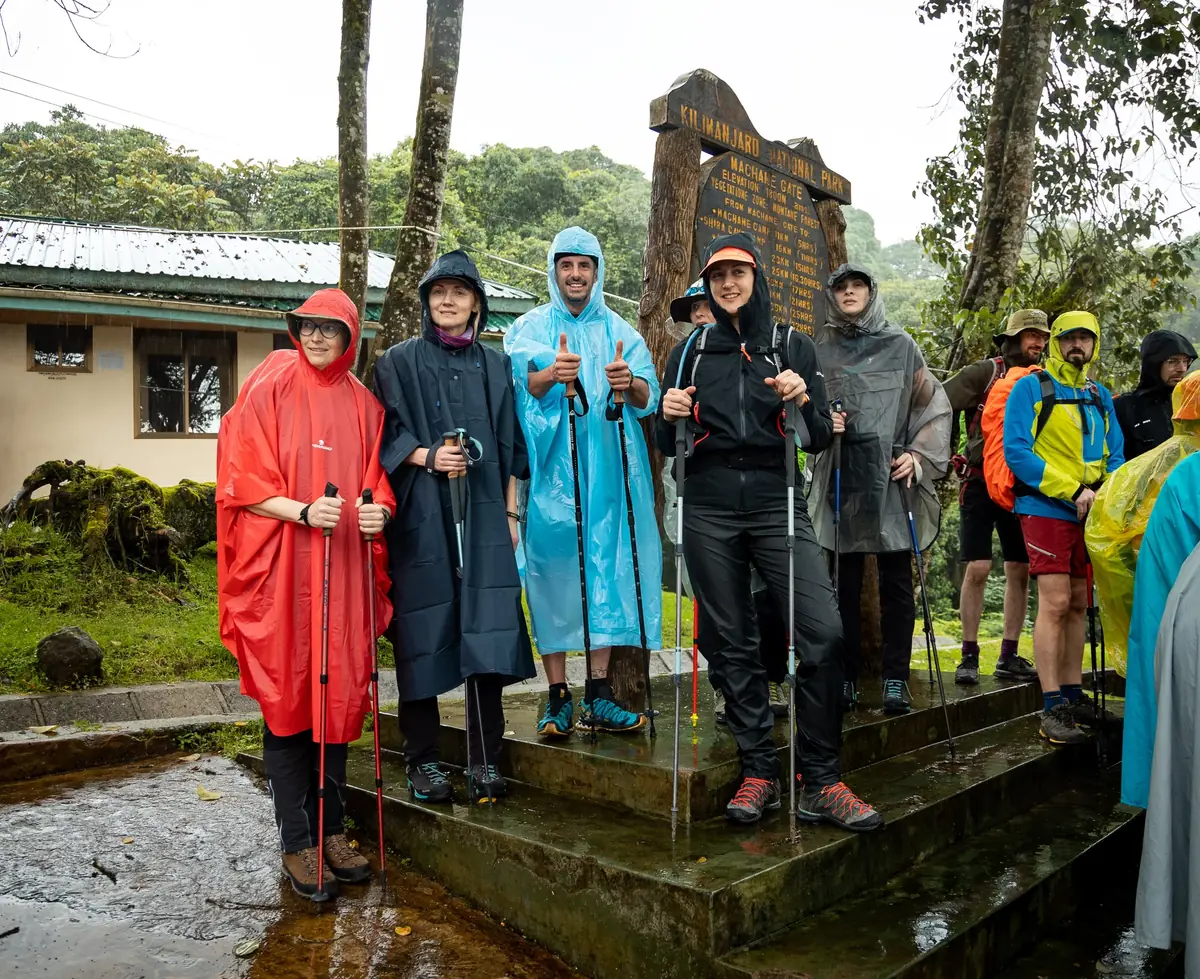
Down / Expedition Jacket
Your layering system on Kilimanjaro goes: base layer → mid-layer fleece → down jacket on top. The down jacket is your active insulation during the climb and your primary warmth layer during breaks and at camp.
Rent — Best for first-timers
$15–30
Arusha rental shops carry expedition-grade down jackets. Look for 600+ fill power, hooded, and water-resistant shell. Verify the zip works and the fill is not clumped before accepting.
Buy — Best for return climbers
$200–500
A quality 700–800 fill power down jacket lasts a lifetime with proper care. If you are climbing Kilimanjaro more than once, or will use it for other cold-weather trekking, buying is better long-term value.
Trekking Poles
Trekking poles reduce impact on knees by up to 30% on the long descents of Kilimanjaro. They are strongly recommended — not mandatory — but our guides note that climbers without poles on summit night are significantly more likely to have knee pain affecting their descent pace.
Rent: $10–20 for a pair in Arusha. Lightweight aluminum poles are standard. Cork handles are more comfortable than foam on multi-day use.
Buy: $60–200 for a quality pair. Carbon fiber is lighter (saves ~200g per pole) but more brittle if dropped on rocks. For one climb, rent. For regular trekking, buy.
Duffel Bag (Porter Bag)
Your duffel bag is what the porters carry. It must be durable (80–100L, waterproof or lined with a dry bag), not rolling luggage. The weight limit enforced by Kilimanjaro National Park is 15 kg per porter bag — over that and you pay an excess fee.
Rent: $10–20 in Arusha. The rental duffel is typically a basic tarpaulin bag. Functional but not comfortable to carry yourself.
Buy: $50–120 for a quality expedition duffel (e.g., Black Diamond, Osprey, or Mountain Hardwear). These have padded shoulder straps, are fully waterproof, and last through multiple climbs. If you already own one, bring it. If not, renting is perfectly fine for a first climb.
Borrowing Gear — Inspection Checklist
Borrowing from a friend who has climbed Kilimanjaro or a similar altitude peak is the cheapest option — free. But borrowed gear needs verification. Use this checklist before you depart:
Your Decision Framework
First-time climber — Rent everything possible
You will spend $50–120 total on rental gear versus $500–900+ buying. Put the savings toward your climb deposit or a safari add-on.
Return climber — Buy the essentials
Your second Kilimanjaro climb costs the same as your first but your gear is already paid for. A $300 down jacket used twice is $150 per climb — comparable to renting twice.
Borrow for low-frequency / generic items
These items have no personal fit component and are expensive to buy for single use. Borrow freely if the gear is in good condition and verified.
Not Sure What You Need?
Our Arusha team reviews gear lists before every climb and can recommend specific rental shops. Get a free gear consultation before you pack.
Get My Free Gear ConsultationFrequently Asked Questions
What is the cheapest way to get gear for Kilimanjaro?
Borrowing from a friend who has climbed before is cheapest if the gear is in good condition. Renting in Arusha is cheapest for first-timers who do not own expedition-grade equipment — most items cost $5–40 to rent for the full climb. Buying is only cheapest per-use if you plan to climb again or already own the gear.
Should a first-time Kilimanjaro climber rent or buy gear?
Rent. A first-time climber should rent all applicable items in Arusha. Expedition-grade gear costs $400–900 to buy and has no resale value after a single climb. Renting the same items costs $50–120 total. The exception: boots, which must always be your own and broken in before you arrive.
Can you borrow gear for Kilimanjaro?
Yes — from friends or family who have climbed Kilimanjaro or similar peaks. Borrowing works well for items with no personal fit component: sleeping bags, down jackets, trekking poles. Do not borrow boots, socks, or underwear. Always inspect borrowed gear yourself and verify the temperature rating before summit night.
What should you never rent on Kilimanjaro?
Hiking boots. Rental boots have been worn by dozens of other climbers and fit no one properly. Blisters from ill-fitting boots are one of the top two reasons climbers turn back before summit. Your boots must be broken in on your feet over at least 50 km of varied terrain before the climb.
Ready to Plan Your Climb?
Our team handles the logistics. You handle the summit. Gear advice included with every booking.
See the full 2026 cost breakdown
Compare every Kilimanjaro route, season, and group size in one table.
For the complete 2026 per-person pricing matrix — including shoulder-season discounts, peak-season premiums, and group-size breakdowns across Marangu, Rongai, Machame, Lemosho, Northern Circuit, and Umbwe — open our dedicated Kilimanjaro climb cost page. It also includes the operator cost schedule, what is included vs. what to budget separately, and a five-step budget framework.
Kilimanjaro Climb — Ready to summit?
+255 786 110 786