
Kilimanjaro by the Numbers — What Happens to Your Body at 5,895m
The scientific account of altitude physiology on Kili — SpO2, heart rate, sleep disruption, and temperature data at every ecological zone.
Kilimanjaro is technically one of the world's most accessible high-altitude summits — no ropes, no technical climbing, no crevasse navigation. Yet fewer than half of climbers who attempt it reach Uhuru Peak. The paradox is simple: the mountain is easy to walk up and brutal on your physiology.
This is the number-forward account of what altitude actually does to your body, zone by zone — based on physiological data ranges, real climber reports, and our 48 years of watching how bodies respond at each camp on the Machame Route.
Zone 1: Rainforest — 1,800m to 2,800m
The challenge in this zone is not altitude. At Machame Gate (1,800m), your blood oxygen saturation (SpO2) sits at approximately 95% — virtually indistinguishable from sea level. Whatever you feel at this point is physical stress: steep terrain, humidity that soaks a shirt in 20 minutes, and a cardiovascular load that surprises first-time climbers.
Temperature swings of 15C between midday sun and night are normal. Your body is managing thermal regulation under a daypack load while the rainforest strips heat via humidity rather than evaporative cooling. Heart rate runs 15–20 bpm above baseline during sustained uphill sections.
Acclimatization begins here whether you notice it or not. Your body is already starting to produce more red blood cells in response to mildly reduced oxygen availability — the beginning of a process that accelerates in the zones above.
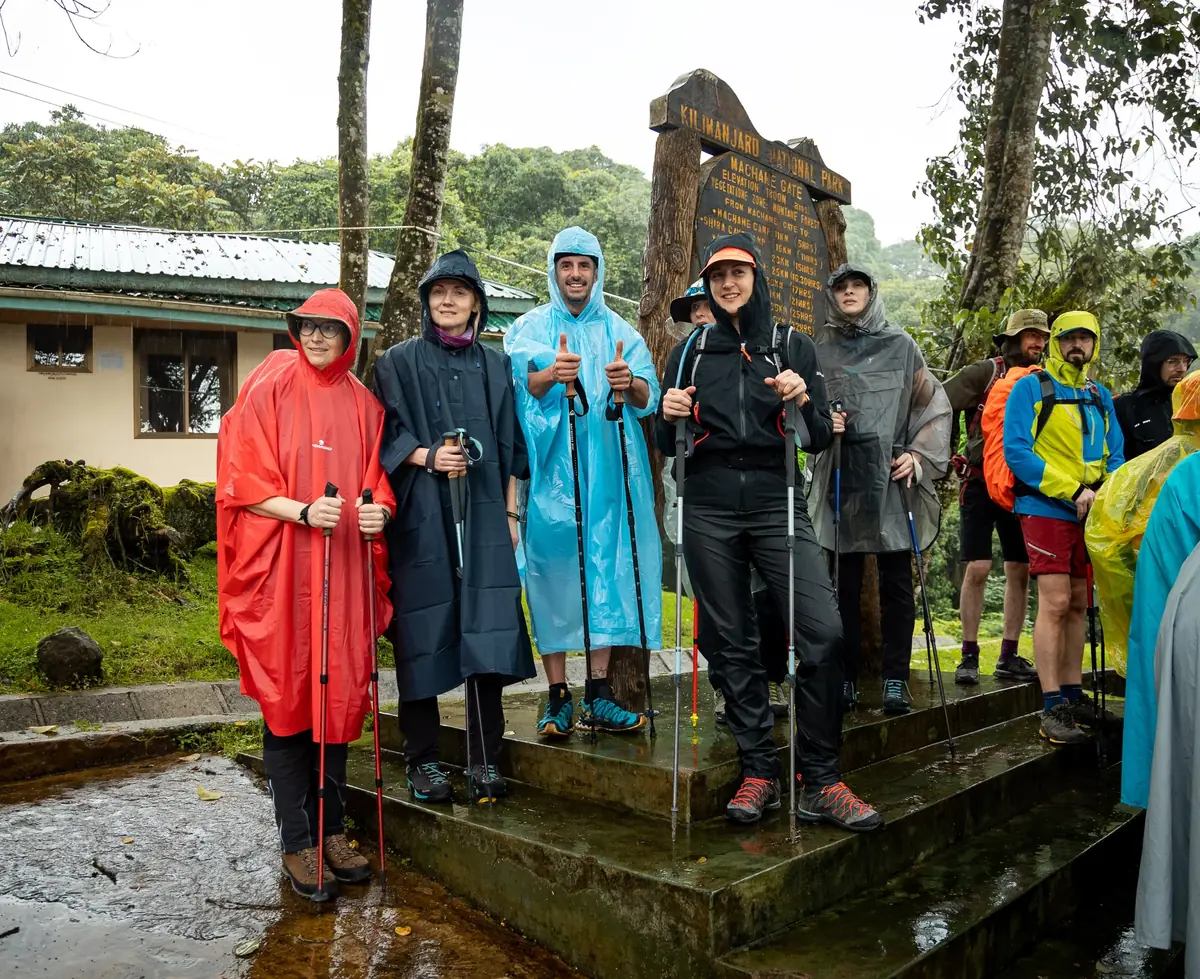
Zone 1 Key Numbers
- Altitude: 1,800–2,800m
- SpO2: ~95%
- HR elevation: +15–20 bpm above baseline
- Temperature range: 15C–30C
- Humidity: 80–100%
- Walking time: 5–7 hours (Machame Gate to Machame Camp)
Zone 2: Heath and Moorland — 2,800m to 4,000m
Altitude begins to assert itself. Between Shira Camp (3,840m) and Karanga Camp (4,055m), most climbers first notice meaningful physiological change. SpO2 drops to approximately 88–92% as barometric pressure falls and your lungs extract less oxygen per breath. This is the zone where acute mountain sickness (AMS) symptoms typically first appear.
Heart rate at rest climbs to 90–100 bpm even without exertion — your cardiac output is increasing to compensate for reduced arterial O2 content. Appetite suppression intensifies: caloric intake drops 20–30% below normal despite high energy expenditure. Most climbers report waking 2–3 times per night, each arousal accompanied by a slightly breathless feeling.
The pole-pole (“slowly slowly”) principle is most critical here. Movement feels manageable — the danger is ascending faster than your body can acclimatize. Our Machame itinerary includes Karanga Camp on Day 4 specifically to build in a rest-day effect before the steep ascent to Barafu.
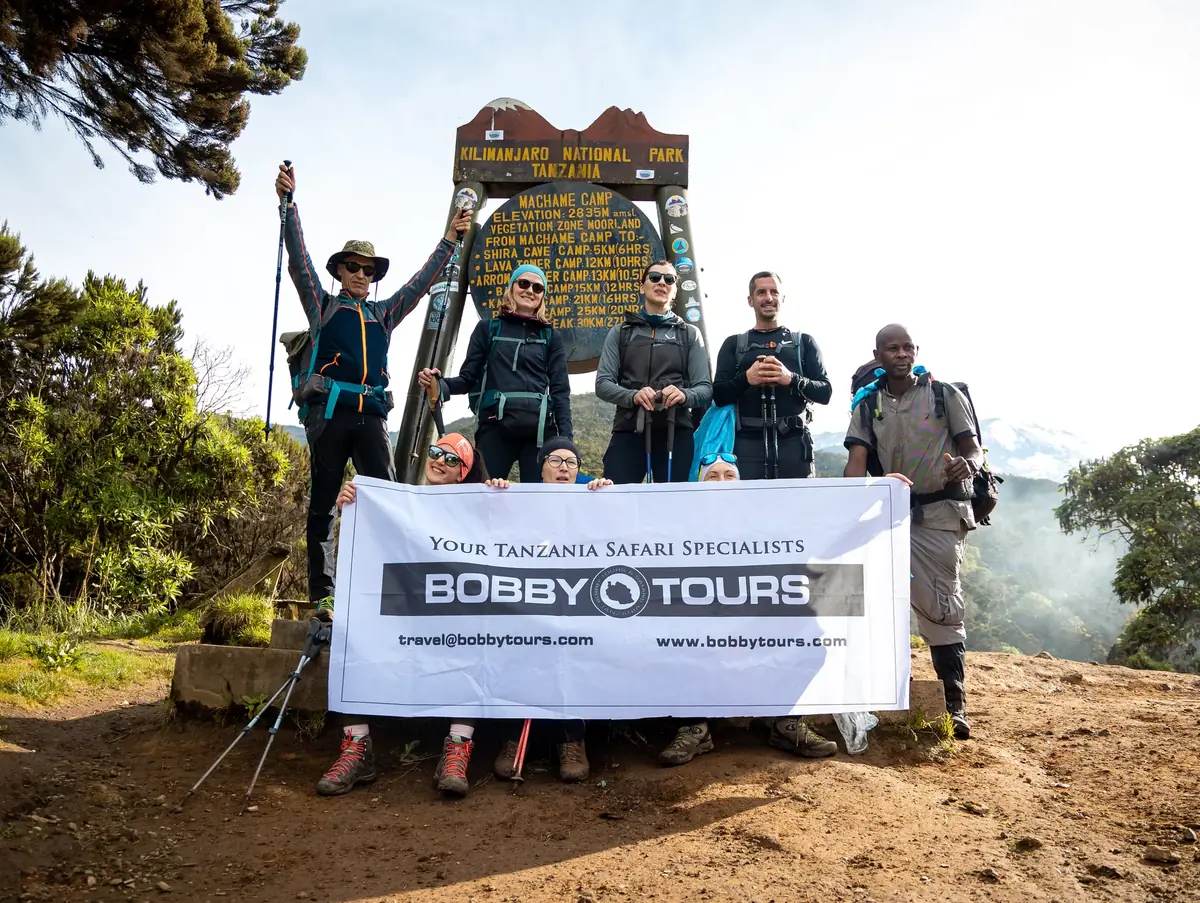
Zone 2 Key Numbers
- Altitude: 2,800–4,000m
- SpO2: 88–92%
- Resting HR: 90–100 bpm
- Caloric intake reduction: 20–30% below normal
- Sleep disruption: 2–3 arousals per night
- Temperature range: 5C–20C
Zone 3: Alpine Desert — 4,000m to 5,000m
This is where physiology diverges sharply from what your brain expects. At 4,500m, atmospheric oxygen content is roughly 60% of sea-level values. SpO2 in this zone ranges from 78–85% for unacclimatized climbers — the threshold where cognitive performance measurably degrades. Decision-making slows. Simple tasks feel effortful. Climbers commonly describe a sensation of “thinking through fog.”
Sleep quality deteriorates markedly. Periodic breathing (Cheyne-Stokes respiration at altitude) causes regular apneas during REM sleep, fragmenting rest cycles. At 4,500m, a “full night's sleep” is typically 3–4 hours of actual rest. Heart rate during even gentle uphill movement reaches 130–145 bpm — near anaerobic threshold for many climbers.
Our 7-day Machame and Lemosho routes are designed so that climbers spend two nights at or above 4,000m before the summit push. This passive exposure — not climbing higher — is what drives physiological acclimatization.
Zone 3 Key Numbers
- Altitude: 4,000–5,000m
- SpO2: 78–85%
- Resting HR: 85–95 bpm; exertional HR: 130–145 bpm
- Effective sleep per night: 3–4 hours
- Temperature range: -5C to 10C (significant wind chill)
- Atmospheric O2 vs sea level: ~60%
Zone 4: Arctic Zone and Summit — 5,000m to 5,895m
The summit push from Barafu Camp (4,673m) to Uhuru Peak (5,895m) covers 1,222m of elevation gain in approximately 6–8 hours of climbing, followed by descent back to high camp. In that window, your body operates at the physiological edge of what most humans can sustain.
Core body temperature drops 1–1.5C in the first two hours of a night summit at -15C to -25C effective temperature. SpO2 at summit is approximately 50–70% of sea-level values. Movement becomes mechanically slow — not because of fatigue, but because available oxygen cannot fuel fast-twitch muscle contraction efficiently. Climbers describe it as “walking underwater” or “in a dream.”
Skin on exposed face and hands cracks in sub-zero wind. Cognitive dulling is universal — guides report that climbers regularly forget simple instructions given 10 minutes prior. Despite this, the experience is almost universally described as controlled discomfort rather than agony. The pace is slow. The goal is to keep moving.

Zone 4 Key Numbers
- Altitude: 5,000–5,895m
- SpO2: 50–70%
- Core temperature drop: 1–1.5C in first 2 hours
- Effective temperature (wind chill): -15C to -25C
- Movement pace on summit push: 200–400m per hour
- Summit push duration: 6–8 hours to Uhuru Peak
How Our Protocols Address Each Stage
Our 48 years of operating on Kilimanjaro have shaped specific protocols that counteract each physiological challenge:
- Zone 1.Hydration schedule from Day 1. Electrolyte replacement begins immediately. Pre-climb fitness guidance so cardiovascular baseline is as strong as possible before you arrive.
- Zone 2.Guided pace discipline enforced by our local guides — no competitive climbers charging ahead. Sleep quality optimization through proper camp elevation and timing. Our guides monitor every climber's SpO2 at each camp.
- Zone 3.Extra acclimatization days built into Machame and Lemosho itineraries. Pulse oximeter monitoring at every camp — our guides adjust the itinerary if SpO2 trends below safe thresholds before the climber continues.
- Zone 4.Dawn summit timing to align with slightly warmer temperatures and better visibility. Layered clothing protocol shared before the climb. Hydration and caloric intake management before the push — pre-ascent nutrition is critical.
Give Your Body the Best Chance
The numbers tell a clear story: Kilimanjaro punishes speed and rewards patience. Our itineraries are built around physiological reality, not marketing. If you are serious about summiting, get a free climb plan tailored to your fitness level and timeline.
48 years on Kilimanjaro. 95% summit success rate. Arusha-based, family-owned.